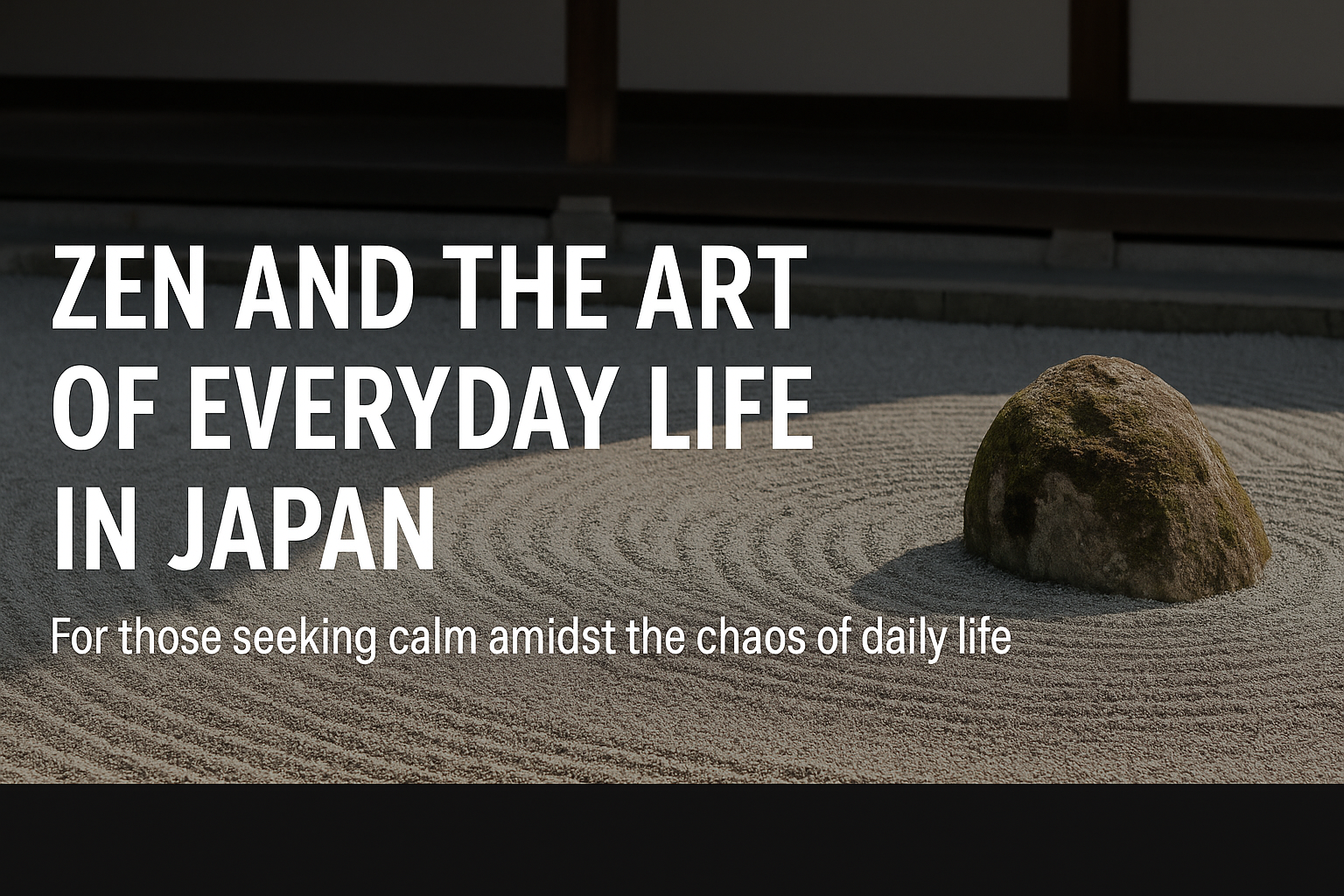
In the rush of modern life, it can be hard to find peace, stillness, and meaning in daily routines. Yet in Japan, Zen Buddhism offers a quiet framework that has influenced not just temples and monks, but everyday actions—from how people clean, to how they cook, sit, and even speak. This article explores how Zen is not just a religion, but a way of life embedded in Japanese culture, helping people live with intention, simplicity, and mindfulness.
1. What Is Zen?
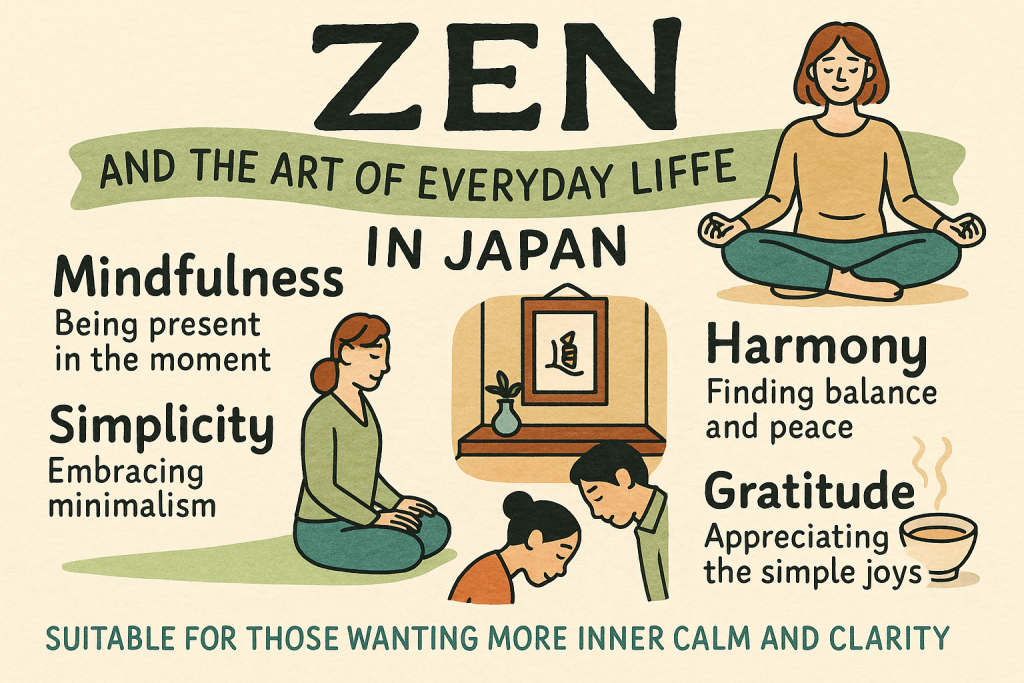
Zen (禅) is a school of Mahayana Buddhism that emphasizes:
- Zazen (seated meditation)
- Direct experience over theory
- Simplicity and impermanence
- Mindfulness in the present moment
Rather than focusing on doctrines, Zen teaches through silence, observation, and practice.
💡 In Japanese culture, Zen is less about belief and more about doing—a mindset that values stillness, presence, and awareness.
2. Zen in Daily Japanese Life
You don’t need to visit a temple to experience Zen. You can feel its spirit in:
① Cleaning (Soji 掃除)
- Cleaning is not just about hygiene—it’s a spiritual practice.
- Schools and temples emphasize daily cleaning as a form of discipline and humility.
② Tea Ceremony (Sadō 茶道)
- Every gesture is deliberate and mindful.
- The focus is not on the tea itself, but the atmosphere and attention to detail.
③ Cooking and Eating
- Ingredients are respected for their natural flavor.
- Meals are often prepared and consumed with calm focus, especially in traditional settings.
④ Sitting and Walking
- Zazen is a formal meditation practice, but sitting quietly or walking with awareness can be a form of Zen in daily life.
⑤ Japanese Design
- From architecture to garden layout, Zen’s principles of minimalism, asymmetry, and natural beauty shape aesthetics.
3. How You Can Practice Zen Daily—Wherever You Are
Even if you don’t live in Japan or practice Buddhism, Zen principles can enrich your life:
- Slow down when washing dishes or walking
- Declutter your living space to create mental calm
- Sit in silence for a few minutes each morning
- Focus on one task at a time
- Appreciate the simple things, like light through a window or the sound of rain
You don’t need robes or incense—just attention.
4. Why Zen Matters Today
In a world overwhelmed by noise, speed, and constant distraction, Zen offers:
- A way to reconnect with the present
- A tool for mental clarity and emotional resilience
- A philosophy that values being over doing
Rather than escape the world, Zen helps us return to it—more grounded, more aware.
Conclusion
Zen isn’t just for monks or spiritual seekers—it’s a path for anyone who wants to find peace in the ordinary. In Japan, it lives quietly in the folds of daily life: in the sweep of a broom, the shape of a teacup, or the silence of an early morning.
Whether you’re looking to slow down, live more mindfully, or simply appreciate the now—Zen might be the simplest answer you didn’t know you needed
If you’re feeling overwhelmed by noise, speed, or a never-ending to-do list, the quiet wisdom of Zen might offer the grounding and clarity you’ve been searching for.





コメント
コメント一覧 (13件)
free shipping enclomiphene
buying enclomiphene without recipe
commande kamagra
kamagra remise
cheapest buy androxal buy singapore
ordering androxal canadian sales
buy dutasteride generic effectiveness
buy cheap dutasteride medication interactions
how to order flexeril cyclobenzaprine purchase online from india
order flexeril cyclobenzaprine generic in usa
Online perscriptions gabapentin
discount gabapentin uk in store
how to order fildena buy online uk
how to order fildena generic release date
get itraconazole cheap from usa
buy itraconazole cheap sale
how to buy staxyn american express canada
cheapest buy staxyn purchase online canada
discount avodart cheap uk
buy cheap avodart purchase tablets
purchase rifaximin generic canada
purchase rifaximin generic cheap
discount xifaxan new york city
discount xifaxan generic equivalent
kamagra sleva online
kamagra uk potřebujete recept