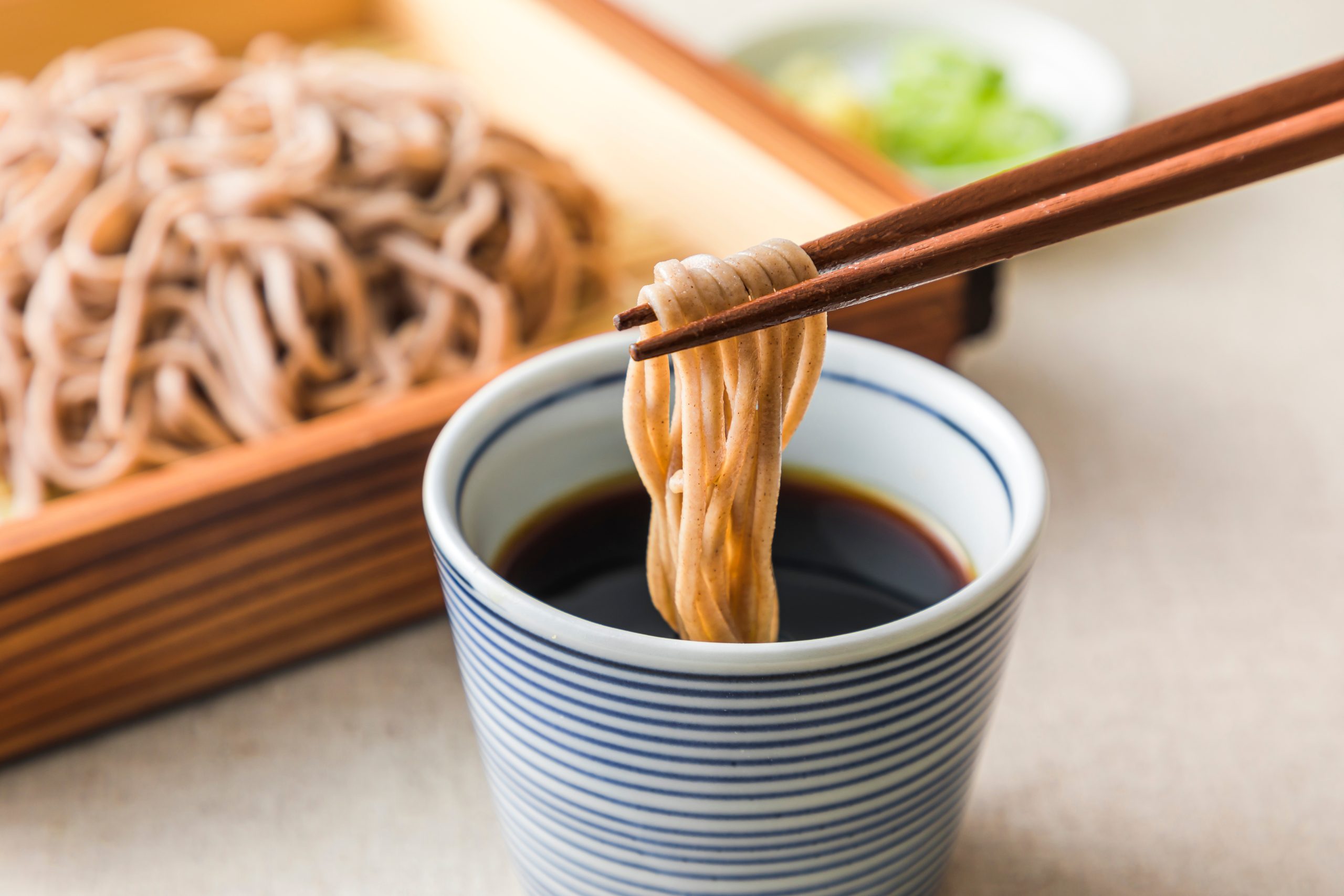
Soba, one of Japan’s traditional dishes, is a simple yet deeply flavorful noodle dish made from buckwheat flour. With its smooth texture and rich taste, soba is loved across Japan. In this article, we will explore the history, types, and ways to enjoy this iconic Japanese dish.
History and Culture of Soba
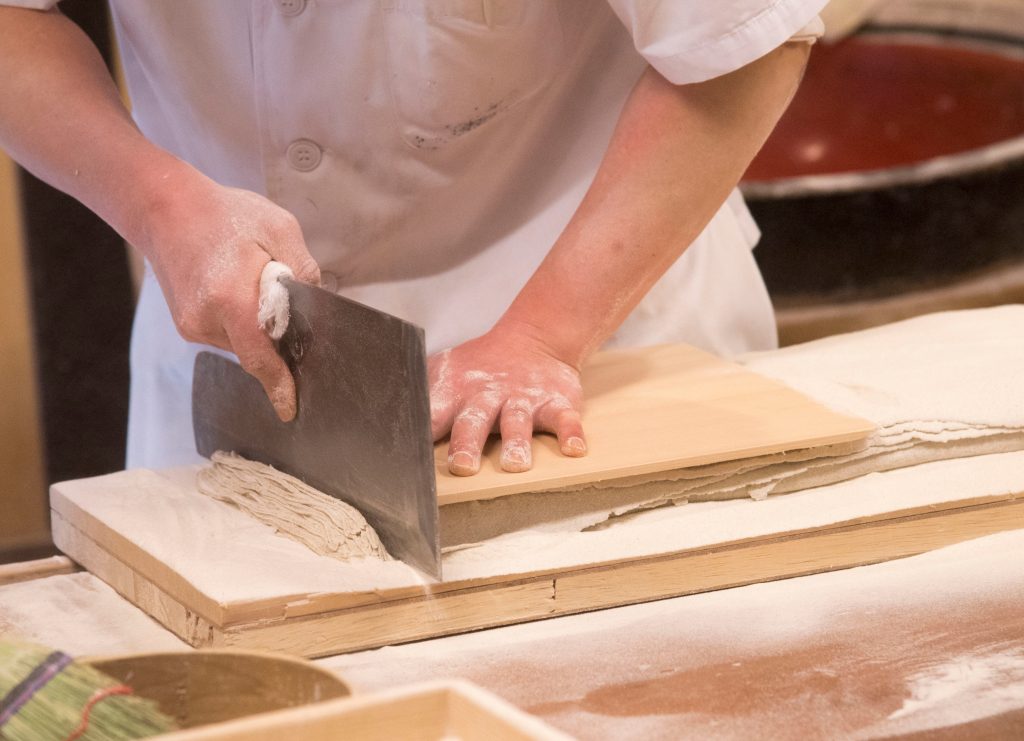
Soba has a long history in Japan, dating back to the Nara period (8th century). However, it was during the Edo period (17th–19th century) that soba noodles became widely popular among common people. Especially in Edo (modern-day Tokyo), a distinct style known as “Edo soba” developed and is still enjoyed today as a part of Japan’s culinary heritage.
Types of Soba
There are many different types of soba, each with its own unique regional characteristics.
1. Zaru Soba
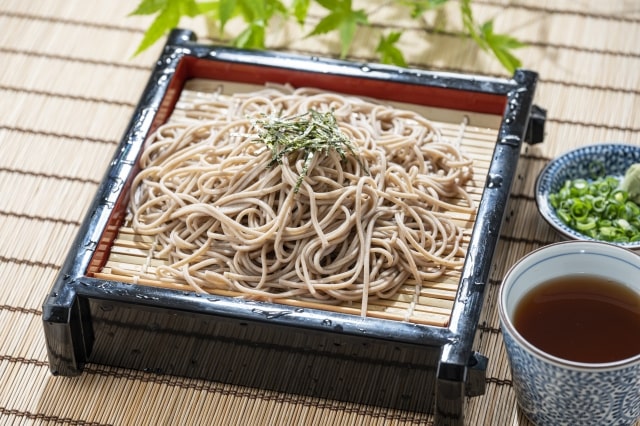
Cold soba noodles served on a bamboo tray (zaru) and dipped in a flavorful soy-based sauce (tsuyu). This refreshing dish is perfect for hot summer days.
2. Kake Soba
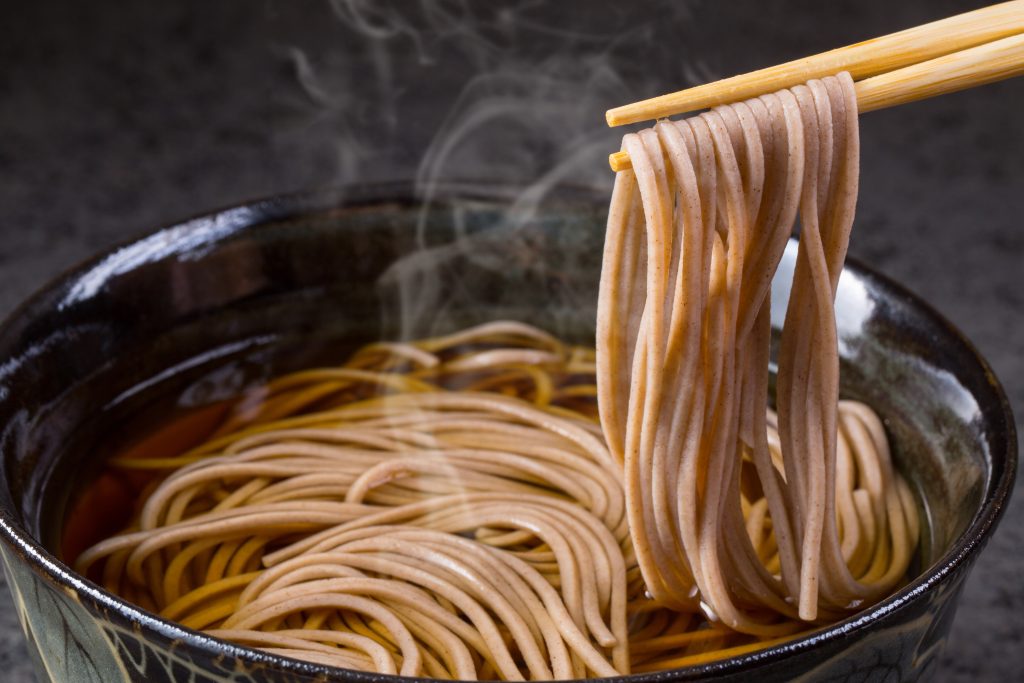
Hot soba noodles served in a simple, warm broth. It is a comforting dish, especially popular during colder months.
3. Tempura Soba

Soba served with crispy tempura (battered and deep-fried seafood or vegetables). Shrimp tempura is the most common topping, but vegetable tempura is also popular.
4. Tororo Soba
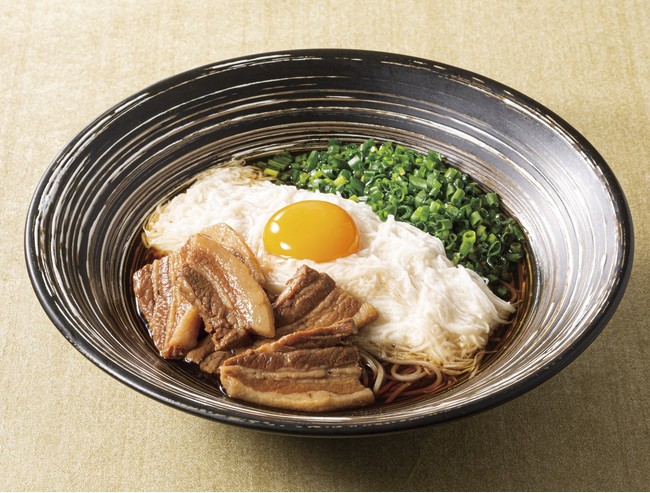
Soba topped with grated yam (tororo), which gives it a smooth and sticky texture. This dish is known for its high nutritional value.
5. Regional Varieties: Izumo Soba, Togakushi Soba, and Wanko Soba
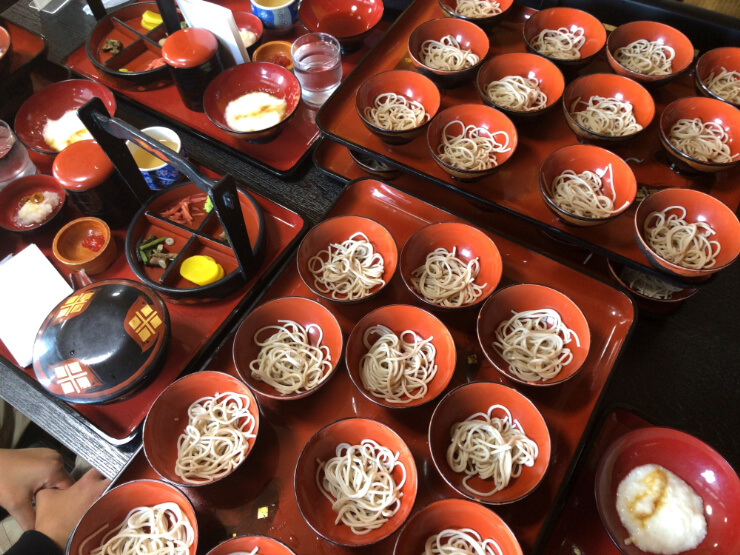
Different regions in Japan have their own unique soba traditions. For example, Izumo Soba (Shimane Prefecture), Togakushi Soba (Nagano Prefecture), and Wanko Soba (Iwate Prefecture) each have distinct flavors and serving styles.
Health Benefits of Soba
Soba is not only delicious but also highly nutritious, making it a great choice for health-conscious eaters.
- Rich in Protein: Soba contains plant-based protein, which helps in muscle maintenance.
- High in Rutin: Soba is a natural source of rutin, a polyphenol that supports healthy blood circulation.
- Low in Calories: Compared to rice or bread, soba is lower in calories, making it a great option for those on a diet.
How to Eat Soba & Japanese Dining Etiquette
In Japan, it is common to slurp soba noodles when eating. This is believed to enhance the flavor and help cool down the hot noodles. However, in some cultures, making noise while eating may be considered impolite, so adjusting your dining etiquette based on the setting is a good idea.
Conclusion
Soba is a traditional Japanese dish that offers a simple yet deep and satisfying flavor. Whether you prefer cold zaru soba or warm kake soba, there is a style to suit every season and mood. If you ever visit Japan, be sure to try authentic soba and experience its unique taste!

コメント
コメント一覧 (13件)
how to order enclomiphene generic now
cheap enclomiphene cheap next day delivery
comprar kamagra sin receta medica se puede comprar
generique kamagra pharmacie au rabais vallee d aoste
ordering androxal generic india
get androxal generic united states
Online us dutasteride
buying dutasteride overnight delivery
how to order flexeril cyclobenzaprine canada shipping
cheapest buy flexeril cyclobenzaprine buy online usa
cheap gabapentin overnight delivery
cheapest buy gabapentin cheap where
how to buy fildena purchase online canada
canadian pharmacy generic fildena
purchase staxyn cost usa
cheapest buy staxyn uk buy online
cheap itraconazole generic from india
buy itraconazole uk meds
cheapest buy avodart new zealand buy online
I want to order avodart without a perscription
buying xifaxan united kingdom
online order xifaxan singapore where to buy
discount rifaximin generic information
cheap rifaximin cost per tablet
generique kamagra
kamagra uk kde koupit pouze