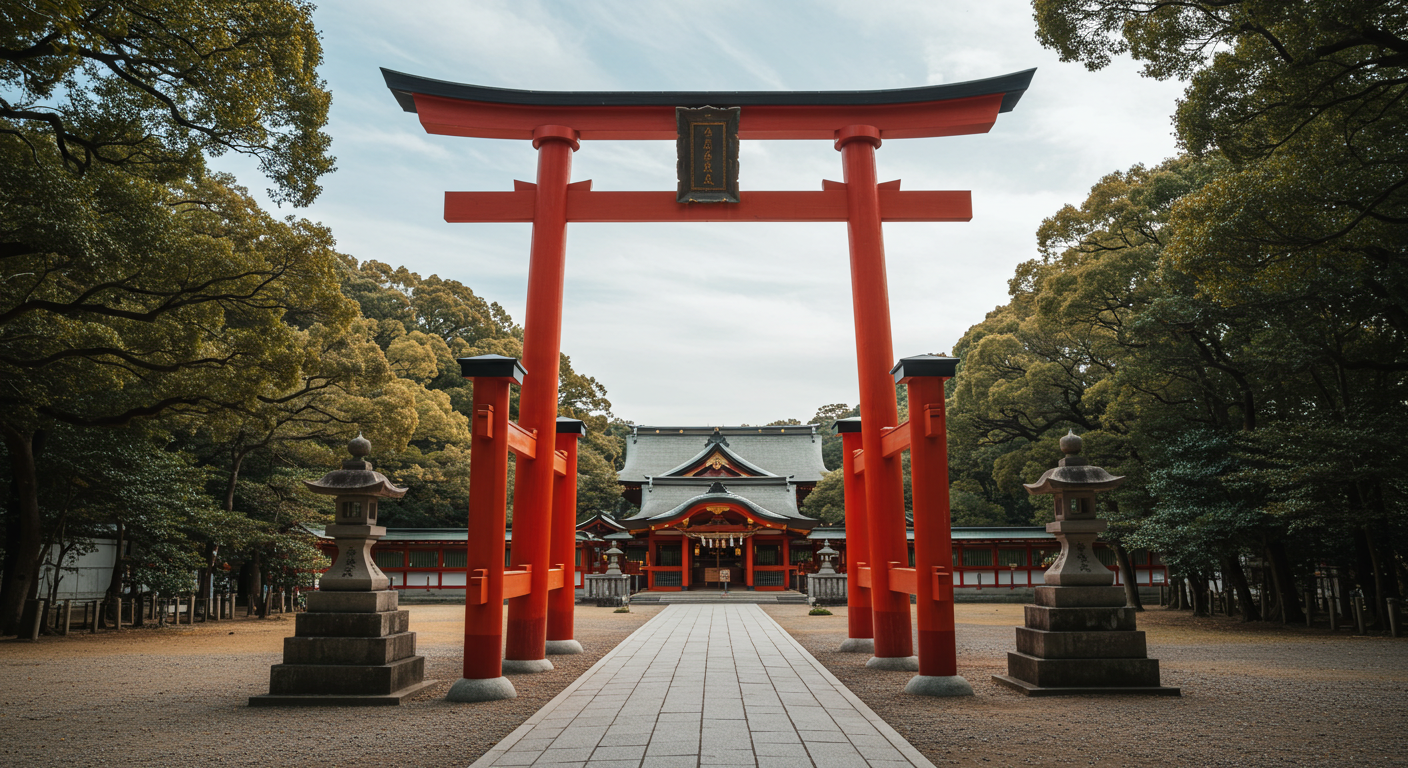
Japanese shrines are always marked by a torii gate. These red or wooden gates are well-known symbols of Japanese culture and religion, but their deeper meanings and origins remain a mystery to many. This article explores the spiritual significance and history of torii gates.
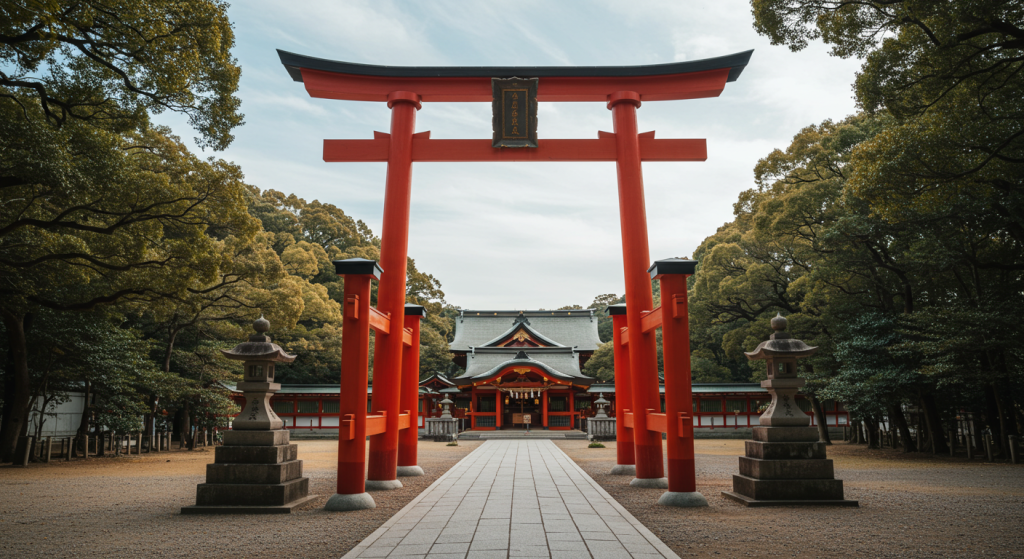
1. What is a Torii Gate?
A torii is a traditional Japanese gate that marks the boundary between the sacred realm and the secular world. Passing through a torii signifies entering a holy space.
- A unique symbol of Shintoism
- An entrance to a sacred place where deities reside
- A spiritual barrier that purifies visitors
Visitors customarily bow before passing through a torii as a sign of respect.
2. Origins and History of Torii Gates
The exact origin of torii gates is uncertain, but several theories exist:
(1) Indian Torana Origin Theory
Some believe torii gates were influenced by the torana gates found in Indian Buddhist temples and introduced to Japan through Buddhism.
(2) Ancient Japanese Ritual Origin Theory
In ancient Japan, wooden pillars were erected in sacred spaces for religious ceremonies, which may have evolved into torii gates.
(3) “Bird Perch” Theory
The word “torii” may mean “bird perch”, suggesting that the gates were originally a resting place for sacred birds believed to be messengers of the gods.
3. Types and Features of Torii Gates
There are various types of torii gates, each with unique characteristics depending on the shrine.
(1) Myōjin Torii
- A commonly seen torii with a curved upper crossbeam.
- The upper lintel (kasagi) curves slightly upward.
- Example: Fushimi Inari Taisha (Kyoto)
(2) Shinmei Torii
- A simple, straight design with a clean structure.
- Typically found at Ise Grand Shrine and its related shrines.
- Example: Ise Grand Shrine (Mie Prefecture)
(3) Sumiyoshi Torii
- Features horizontal beams that are completely straight.
- Example: Sumiyoshi Taisha (Osaka Prefecture)
(4) Sannō Torii
- Recognizable by an extra horizontal beam placed on top of the main lintel.
- Example: Hiyoshi Taisha (Shiga Prefecture)
Different torii designs reflect the unique traditions and histories of various shrines.
4. The Spiritual Meaning of Torii Gates
Torii gates are not just architectural features; they hold deep spiritual significance in Shinto belief.
(1) A Sacred Boundary
- Passing through a torii signifies stepping from the mundane world into a sacred space.
- Visitors traditionally bow before entering as a sign of respect.
(2) Symbol of Purification and Good Fortune
- Walking through a torii is believed to cleanse the body and soul of impurities.
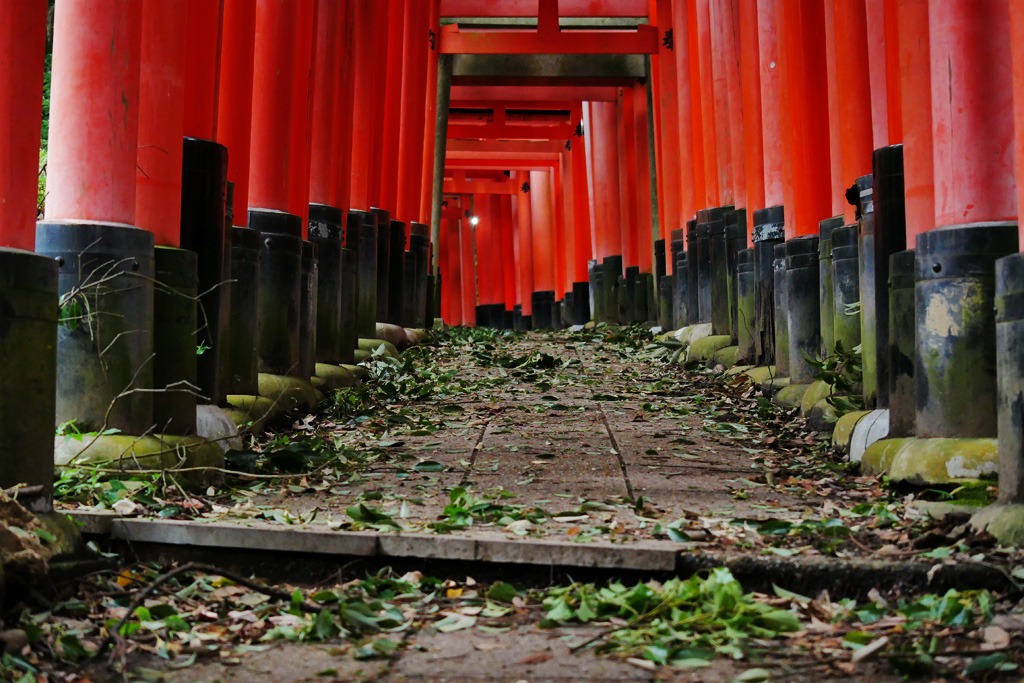
- Some torii, like the “Senbon Torii” at Fushimi Inari Shrine, are said to bring blessings and grant wishes.
(3) The Meaning of the Red Color
- Many torii gates are painted red, a color believed to ward off evil spirits.
- The pigment used in traditional red paint contained mercury, which was thought to have protective and sacred properties.
5. Famous Torii Gates in Japan
Japan is home to many iconic torii gates, each with its own historical and cultural significance. Here are some of the most famous ones:
(1) Fushimi Inari Taisha (Kyoto)
- Renowned for its “Senbon Torii” (Thousand Torii Gates).
- The head shrine of all Inari shrines in Japan.
(2) Itsukushima Shrine (Hiroshima)
- A breathtaking torii gate standing in the sea.
- A UNESCO World Heritage Site.

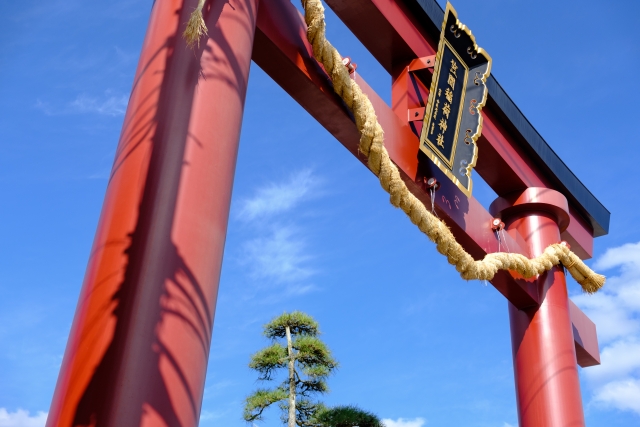
(3) Kasama Inari Shrine (Ibaraki)
- One of Japan’s three major Inari shrines.
- Features rows of beautiful vermilion torii gates.
(4) Nikko Toshogu Shrine (Tochigi)

- A magnificent stone torii marking the entrance to Tokugawa Ieyasu’s mausoleum.
- Part of a UNESCO World Heritage Site.
6. Conclusion: The Significance of Torii Gates
Torii gates are not merely decorative structures; they serve as gateways to the divine and play a crucial role in Japanese spirituality.
- They mark the boundary between the sacred and the ordinary.
- They symbolize purification and spiritual protection.
- Their design varies by region and history, reflecting diverse traditions.
By paying attention to torii gates, visitors can gain a deeper appreciation of Japan’s cultural and religious heritage.

コメント
コメント一覧 (13件)
obtenir un échantillon gratuit de kamagra
generique kamagra sens prescrire
buy enclomiphene buy online uk
cheap enclomiphene generic when will be available
ordering androxal canada no prescription
ordering androxal cheap europe
buy dutasteride generic compare
buy cheap dutasteride cost new zealand
discount flexeril cyclobenzaprine cheap canada pharmacy
how to order flexeril cyclobenzaprine generic compare
gabapentin where to buy canada
buy gabapentin purchase tablets
cod fildena no prescription
Ordering fildena online no membership overnight delivery
buy cheap itraconazole cost at walmart
how to buy itraconazole cheap from india
buy avodart generic online uk
order avodart generic cheapest
cheapest buy staxyn buy japan
buy staxyn generic pharmacy in canada
get xifaxan generic when available
ordering xifaxan cheap pharmacy
purchase rifaximin australia discount
how to buy rifaximin american express
kamagra koupit fedex
jak získat kamagra online