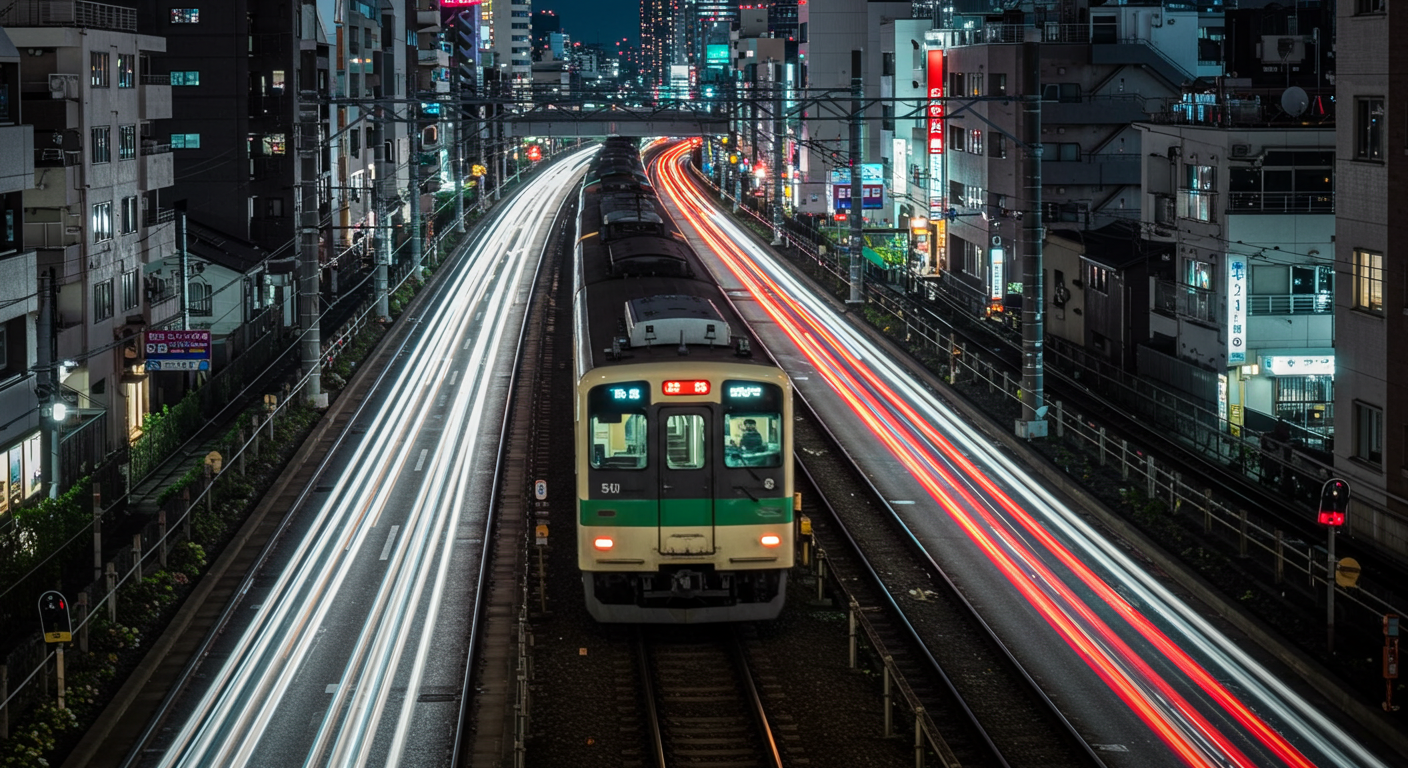
Japanese trains are renowned worldwide for their punctuality, with minimal delays. This level of precision surprises many foreigners. But what are the historical and cultural reasons behind Japan’s reputation for having the most punctual trains in the world?
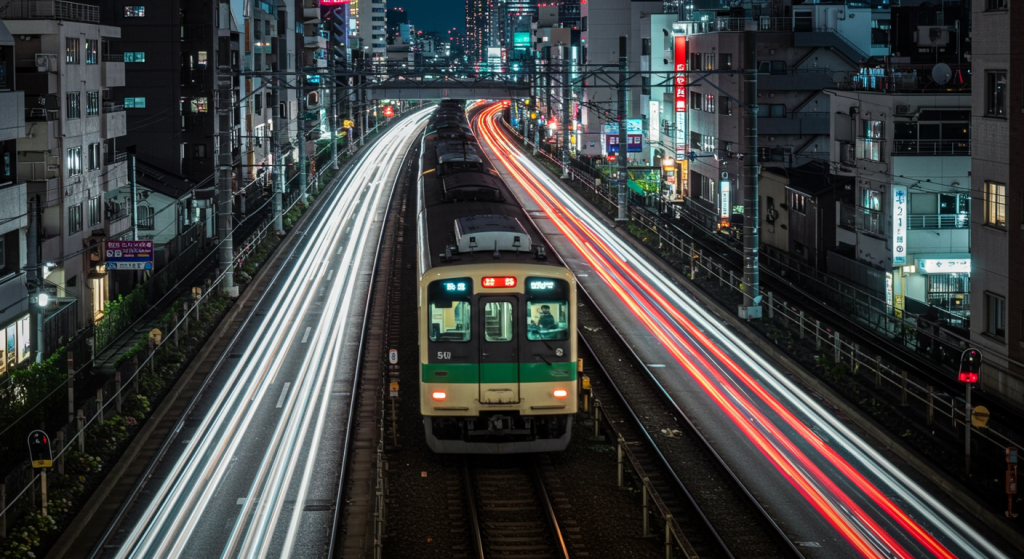
1. Historical Background: Post-War Reconstruction and Railway Development
Japan’s pursuit of train punctuality can be traced back to its post-war reconstruction and the expansion of its railway network.
- Post-war economic growth and the need for mass transportation After World War II, Japan experienced rapid economic growth, leading to severe congestion in urban areas. Punctual train operations became essential to efficiently transport large numbers of passengers within limited timeframes.
- The launch of the Shinkansen in 1964 The world’s first high-speed railway, the Shinkansen, was introduced in 1964 to coincide with the Tokyo Olympics. The implementation of strict timetable management for the Shinkansen influenced railway operations nationwide.
2. Cultural Factors: A Societal Emphasis on Punctuality
In Japan, being on time is a deeply ingrained cultural value, which extends to train operations.
- “Being late is an inconvenience” mindset In Japan, being late is considered an inconvenience to others. Since train delays can disrupt passengers’ work schedules and plans, railway companies prioritize punctual operations.
- Issuance of “delay certificates” Japanese railway companies issue delay certificates even for minor delays of just a few minutes. This reflects the strong cultural emphasis on punctuality.
3. Technological Factors: Advanced Train Operation Systems
Japan’s trains maintain their punctuality by utilizing cutting-edge technology.
- Automatic Train Control (ATC) system Japan’s ATC system prevents operational errors by optimizing speed and stop timing, ensuring safety and precision.
- Meticulously designed timetables Train schedules are designed down to the second, and even the slightest delay is immediately addressed.
- Real-time monitoring by control centers Railway control centers constantly monitor train operations and promptly take action to mitigate any delays.
4. Conclusion: A Fusion of Culture, History, and Technology
The extreme punctuality of Japanese trains results from the integration of historical, cultural, and technological factors.
- Post-war mass transportation needs led to precise scheduling
- A culture of punctuality influences train operations
- State-of-the-art technology ensures accurate timetables
Thanks to these combined influences, Japan’s railways maintain a level of punctuality that remains unparalleled worldwide.






コメント
コメント一覧 (14件)
こんにちは、これはコメントです。
コメントの承認、編集、削除を始めるにはダッシュボードの「コメント」画面にアクセスしてください。
コメントのアバターは「Gravatar」から取得されます。
buying androxal cheap online canada
online order androxal canada medicine
enclomiphene with doctor consult
cheapest buy enclomiphene generic available in united states
how to buy rifaximin generic uk
buying rifaximin buy for cheap
online order xifaxan generic brand
how to buy xifaxan cheap buy online no prescription
how to buy staxyn generic order
buy cheap staxyn cheap wholesale
cheapest buy avodart new zealand buy online
ordering avodart usa overnight delivery
get dutasteride generic cheapest
ordering dutasteride singapore where to buy
get flexeril cyclobenzaprine cheap uk buy purchase
order flexeril cyclobenzaprine generic medications
ordering gabapentin generic mastercard
canadian gabapentin online
discount fildena buy online canada
cheap fildena canada no prescription
buy itraconazole generic london
buy itraconazole cheap with prescription
kamagra online bez lékařského předpisu přes noc
comprar kamagra je v rozporu
comment obtenez-vous kamagra
achat kamagra sans prescrire france