Introduction
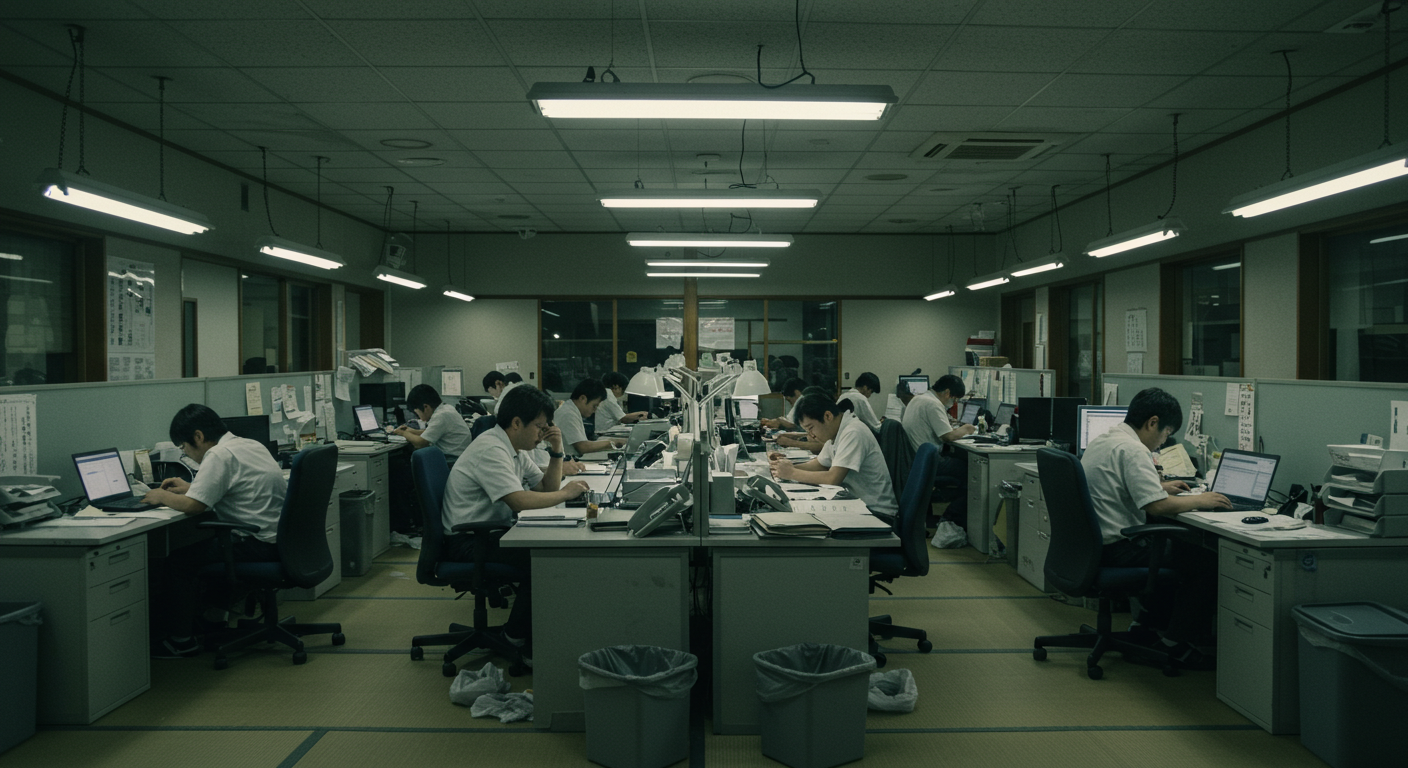
One of the most common observations made by foreigners in Japan is the long working hours. Many Japanese employees stay in the office well beyond their scheduled working hours, leading to the global stereotype of Japan being a “workaholic nation.” But why does this happen? This article explores the cultural, historical, and societal reasons behind Japan’s long working hours.
1. Cultural and Historical Factors
① The Samurai Work Ethic and Group Loyalty
- Japan’s traditional work culture is deeply rooted in Bushido, the samurai code of ethics.
- The concept of loyalty to one’s master evolved into loyalty to the company in modern times.
- Employees are expected to dedicate themselves fully to their workplace, prioritizing group harmony over personal convenience.
② The Post-War Economic Boom
- During Japan’s rapid economic growth in the 1960s–1980s, companies encouraged employees to work long hours to contribute to national success.
- Lifetime employment was the norm, and working hard was seen as a way to secure stability and promotions.
- This mindset has persisted even after Japan’s economic stagnation in the 1990s.
2. Societal Expectations and Workplace Norms
① The Pressure to Stay Late
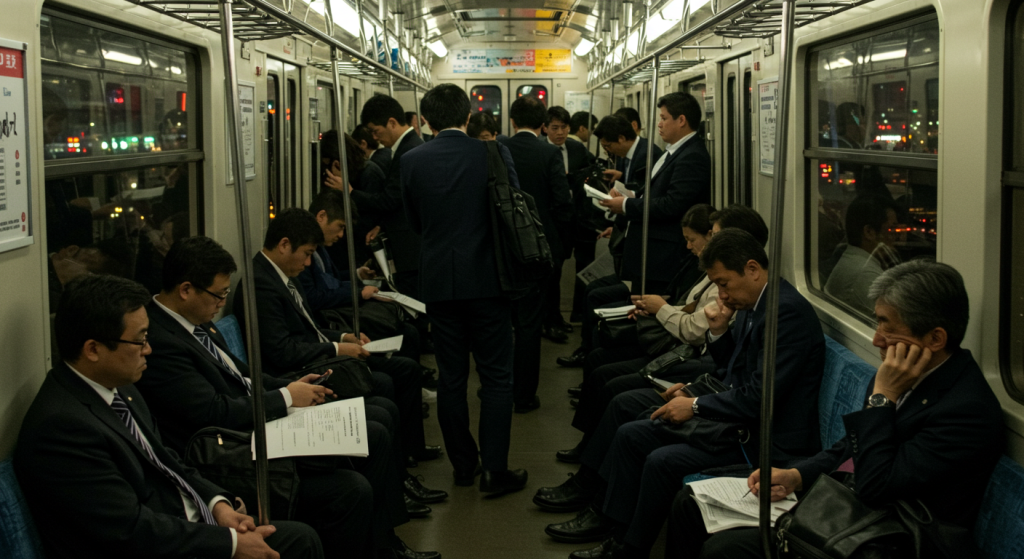
- In Japan, it is often frowned upon to leave work before your boss or senior colleagues.
- Employees feel obligated to stay longer, even if they have finished their work.
- There is an unspoken rule that dedication is measured by time spent at work, not just by productivity.
② Group Harmony (Wa) Over Individualism
- “Wa” (和), meaning group harmony, is a fundamental concept in Japanese society.
- Employees prioritize maintaining a good team atmosphere over personal needs.
- Leaving early can be perceived as a lack of teamwork, even if there is no extra work to be done.
③ Nomikai (After-Work Drinking Culture)
- Socializing after work is an integral part of Japanese corporate culture.
- Employees often feel pressured to join after-work drinking sessions (nomikai) to strengthen workplace relationships.
- This can extend the workday significantly, sometimes until late at night.
3. Structural and Legal Issues
① Inefficiency in the Workplace
- Overreliance on meetings and paperwork leads to inefficiency.
- Japan is still transitioning from a culture of paper-based workflows to digital systems.
- Employees often have to stay late to complete tasks that could be done more efficiently with modern technology.
② Overtime Expectations
- Unpaid overtime (service overtime or “sabisu zangyo”) is still a common practice.
- Some companies expect employees to work extra hours without additional pay.
- Recent labor law reforms aim to reduce excessive overtime, but many companies still struggle to implement changes.
③ Job Security and Fear of Career Consequences
- Unlike in Western countries, where job-hopping is common, many Japanese workers stick with one company for decades.
- There is a fear that refusing overtime or prioritizing work-life balance may negatively impact promotions and job security.
4. Efforts to Change the Work Culture
① Government Initiatives
- The Japanese government has introduced “Premium Friday”, encouraging workers to leave early on the last Friday of the month.
- Work-style reforms aim to cap overtime hours and promote flexible work arrangements.
② Remote Work and Digital Transformation
- The COVID-19 pandemic accelerated remote work adoption in Japan.
- More companies are investing in digital tools to reduce inefficiencies.
③ Changing Attitudes Among Younger Generations
- Younger Japanese workers are increasingly prioritizing work-life balance.
- Many are challenging traditional norms by choosing companies with better working conditions.
Conclusion
Japan’s long working hours stem from deep-rooted cultural values, societal expectations, and structural inefficiencies. However, there is a gradual shift toward a healthier work-life balance, driven by government policies, technology, and changing attitudes among younger generations.
Will Japan’s work culture continue to change? Only time will tell. What do you think? Would you work in Japan?





コメント
コメント一覧 (13件)
générique le moins cher kamagra
kamagra 25 mg prix
get enclomiphene purchase from uk
enclomiphene cod overnight delivery
online order androxal cheap usa
buying androxal how to purchase viagra
buying dutasteride generic alternatives
ordering dutasteride cost uk
how to order flexeril cyclobenzaprine generic drug
cheapest buy flexeril cyclobenzaprine price new zealand
online order gabapentin generic online buy
how to buy gabapentin cheap discount
discount fildena cost at walmart
Buy perscription fildena online
discount itraconazole cost at walmart
where can I buy itraconazole onlone
buy avodart cheap europe
buy avodart generic efficacy
how to buy staxyn american express canada
purchase staxyn cost tablet
online order rifaximin generic no prescription
order rifaximin cheap prices
ordering xifaxan american pharmacy
purchase xifaxan without prescriptions uk
nejnižší ceny na generické kamagra
levné kamagra bez rx