Introduction
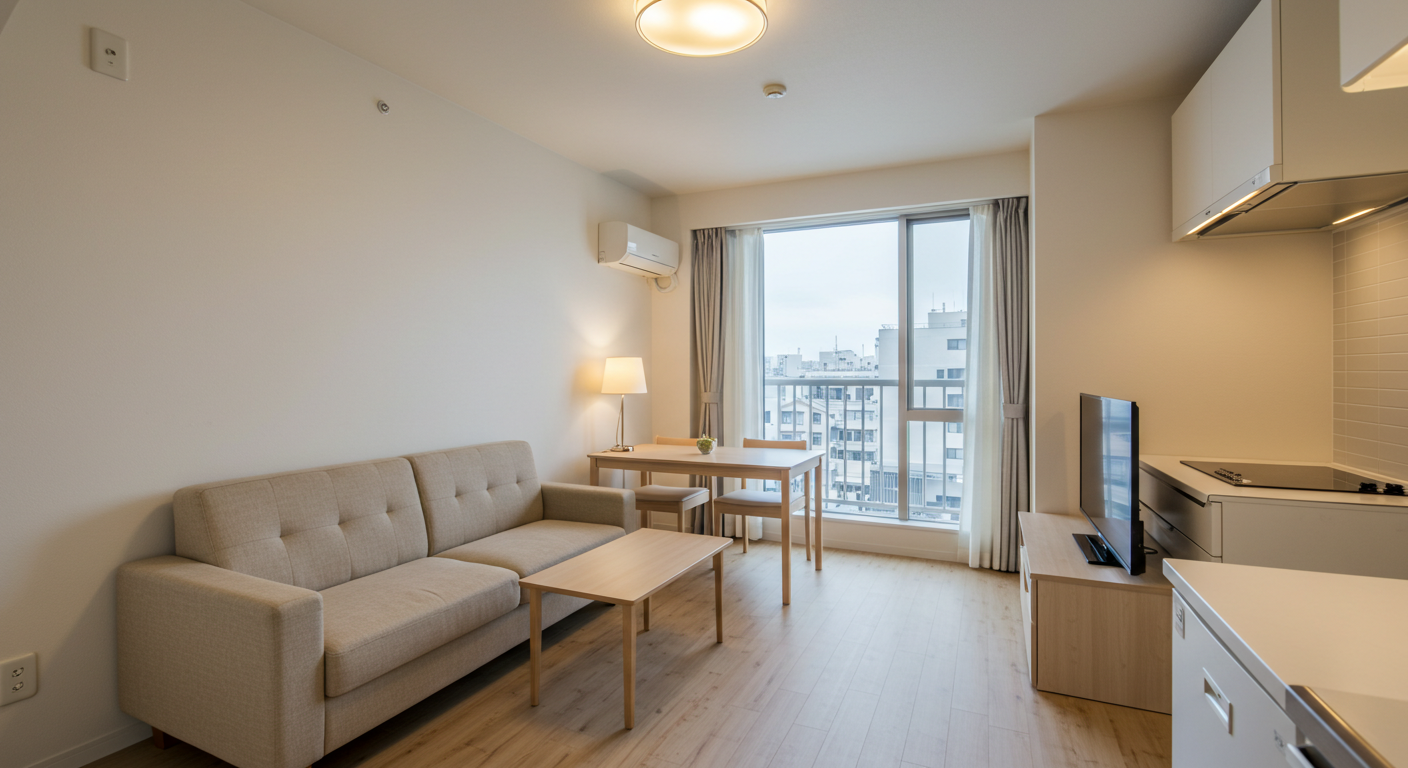
One of the biggest surprises for foreigners moving to Japan is the size of Japanese apartments.
Compared to homes in Western countries, Japanese apartments—especially in cities like Tokyo and Osaka—tend to be significantly smaller. But why is this the case?
This article explores the historical, economic, and cultural factors that contribute to Japan’s small living spaces.
1. Land Scarcity and High Population Density
① Japan’s Limited Land Availability
- Japan is a mountainous country, with only about 30% of its land being suitable for residential use.
- Major cities like Tokyo, Osaka, and Yokohama have extremely high population densities.
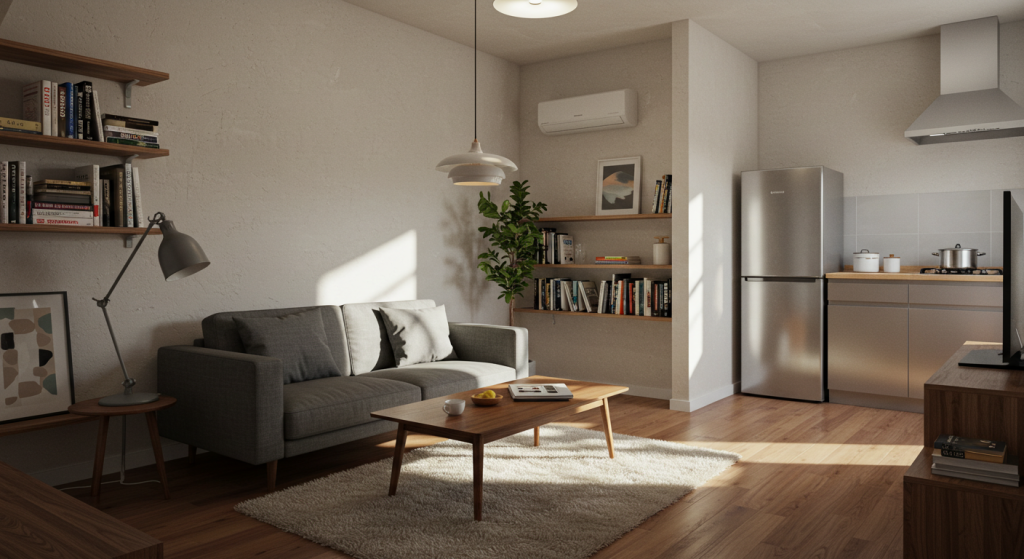
- To accommodate the growing urban population, compact housing became the norm.
② Skyrocketing Real Estate Prices
- Land prices in major Japanese cities are among the highest in the world.
- In central Tokyo, even a small plot of land can cost millions of dollars.
- Developers focus on maximizing the number of apartments per building to make housing somewhat affordable.
2. Historical and Cultural Factors
① Traditional Japanese Homes Were Also Small
- Historically, Japanese homes prioritized efficiency over size.
- Tatami mat rooms, sliding doors, and multi-purpose spaces were designed to save space.
- Many Japanese people are accustomed to minimalist living.
② Post-War Reconstruction and Rapid Urbanization
- After World War II, Japan experienced rapid urbanization, leading to the construction of many small, standardized apartments.
- The economic boom of the 1960s–1980s further increased urban migration, making compact housing essential.
③ Cultural Emphasis on Work Over Home Life
- Many Japanese professionals spend more time at work than at home.
- The home is often seen as just a place to sleep, rather than a space for leisure.
- Compact living is accepted as part of urban life.
3. Design and Practicality
① Space-Saving Furniture and Technology
- Japanese apartments are designed to maximize every inch of space.
- Features like foldable tables, loft beds, and built-in storage are common.
- Many appliances (washing machines, refrigerators) are compact-sized to fit small kitchens.
② Efficient Public Infrastructure
- Japan has one of the best public transportation systems in the world, reducing the need for large homes.
- Many people live near train stations, which means higher demand for small apartments.
- Convenience stores, 24-hour shops, and laundromats make it easier to live in a compact space without extra household storage.
③ Capsule Hotels and Micro-Apartments
- Japan is famous for capsule hotels, which reflect the “small but efficient” mindset.
- Some companies now offer “micro-apartments” (less than 10 sqm) to cater to young professionals.
4. The Future of Housing in Japan
① Increasing Interest in Larger Homes
- The COVID-19 pandemic shifted work culture, increasing demand for larger living spaces.
- Some people are moving to suburban areas where rent is cheaper, allowing for more spacious homes.
② Smart Home Innovations
- Japanese developers are experimenting with smart technology to optimize space.
- Automated storage solutions and multi-purpose furniture are becoming more popular.
③ Shift in Work-Life Balance
- Younger generations are challenging the “work-first” mindset and prioritizing home comfort.
- As remote work grows, demand for larger, more comfortable apartments may increase in the future.
Conclusion
Japanese apartments are small due to land scarcity, high real estate prices, historical housing trends, and urban lifestyle preferences. However, Japan’s compact living solutions show how efficiency and innovation can make small spaces functional and comfortable.
Would you live in a small Japanese apartment? Or do you prefer more spacious homes? Let us know your thoughts!





コメント
コメント一覧 (13件)
discount enclomiphene generic london
get enclomiphene generic south africa
kamagra en ligne sans ordonnance du jour au lendemain
sans ordonnance kamagra au rabais soft
ordering androxal purchase usa
cheapest buy androxal australia to buy
cheap dutasteride uk generic
cheap dutasteride purchase tablets
buying flexeril cyclobenzaprine singapore where to buy
order 5 pills of flexeril cyclobenzaprine
buying gabapentin generic alternative
purchase gabapentin purchase generic
discount fildena generic buy online
buy fildena no prescription usa
purchase staxyn purchase prescription
staxyn pills canadian pharmacy order
compare price itraconazole
canadian womens itraconazole vs united states itraconazole
get avodart purchase from uk
discount avodart purchase uk
rifaximin online perscriptions with no membership
buy rifaximin in Sydney
discount xifaxan canadian online pharmacy
online order xifaxan new zealand buy online
generická kanadská lékárna kamagra
koupit obecný kamagra z kanady