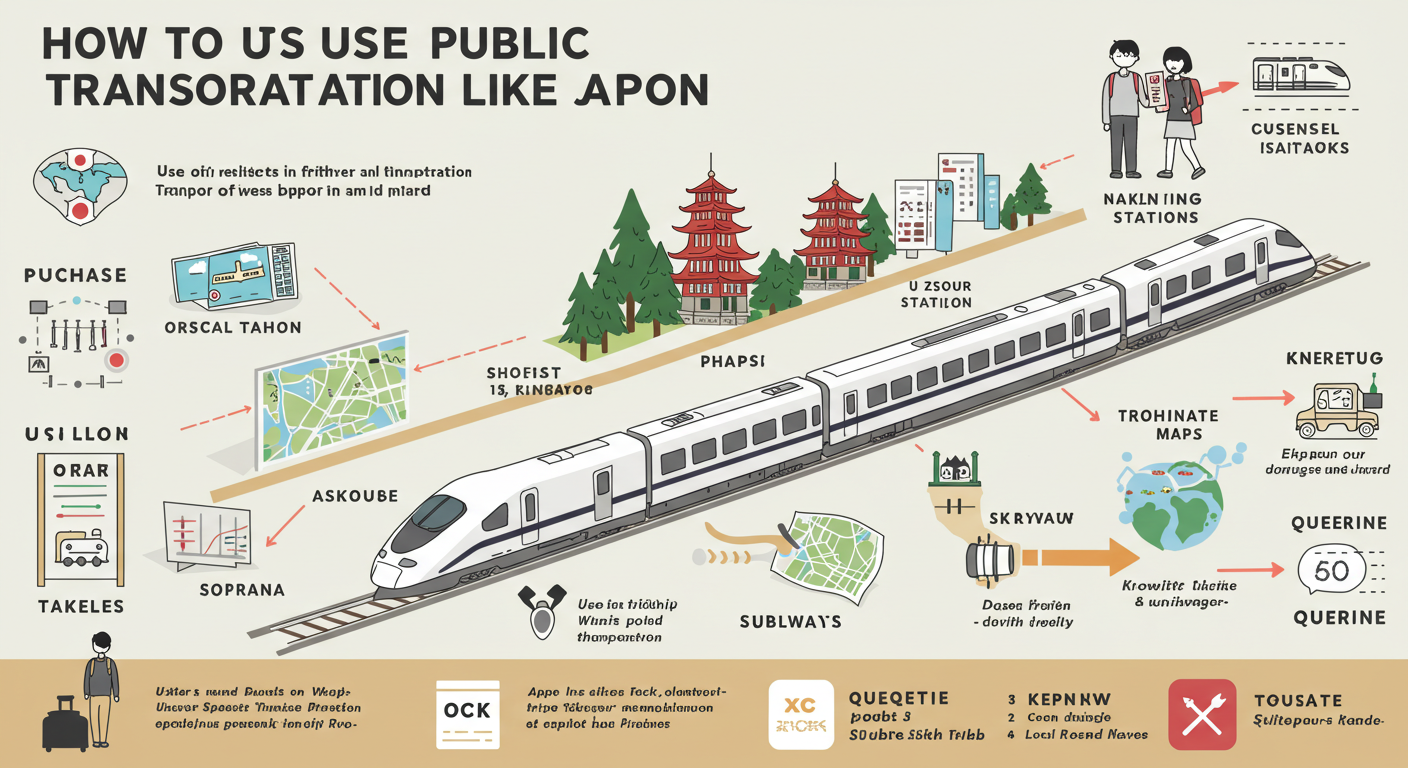
Japan’s public transportation system is world-famous for its punctuality, cleanliness, and efficiency. Whether you’re visiting for a short trip or settling in for the long term, mastering public transport will make your life much easier. This guide covers everything you need to know to navigate Japan’s trains, buses, and metros like a local.
1. Types of Public Transportation in Japan
① Trains (JR and Private Lines) 🚆
- Japan Railways (JR) is the national network, including the famous Shinkansen (bullet train).
- Major cities also have private railway companies (e.g., Keio, Hankyu, Odakyu).
- JR Pass is great for tourists but not for residents.
② Subways and Metro Systems 🚇
- Available in major cities like Tokyo, Osaka, Kyoto, Nagoya, Fukuoka.
- Run separately from JR—different ticket systems apply.
③ Buses 🚌
- Ideal for areas without train access.
- City buses (local) vs. Highway buses (long-distance).
④ Trams and Monorails 🚋
- Found in cities like Hiroshima, Kagoshima, and Tokyo (monorails to airports).
2. IC Cards: Your Ticket to Convenience
What Are IC Cards?
- Reloadable smart cards used for trains, subways, buses, and even shopping.
- Examples: Suica (Tokyo), Pasmo, Icoca (Osaka), Toica, Kitaca.
Benefits:
- No need to buy individual tickets
- Can be used across different companies
- Accepted at convenience stores, vending machines, and restaurants
💡 Tip: Cards can be bought and recharged at train stations. Deposit: ¥500.
3. How to Ride a Train or Subway
① Entering the Station
- Use your IC card or buy a ticket at the machine
- Tap your IC card at the ticket gate (don’t insert it)
② Platforms and Signs
- Platform signs are in Japanese and English
- Check train line color, number, and destination
③ Boarding the Train
- Line up at the platform markings
- Let passengers off before boarding
- Priority seats are for elderly, pregnant, and disabled passengers
④ Exiting the Station
- Tap your IC card again at the exit gate
- Fare is automatically deducted
4. How to Ride a Bus in Japan
① Getting On
- In most cities: enter through the rear door, take a numbered ticket (if no IC card)
- In Tokyo: enter from the front and pay immediately
② Paying the Fare
- Use an IC card or exact change
- Some routes have flat fares; others vary by distance
③ Getting Off
- Press the stop button before your destination
- Exit from the front door
5. Useful Apps and Tools
✅ Google Maps – Great for route planning
✅ Navitime – English-friendly, accurate schedules
✅ Japan Travel App by NAVITIME – Best for tourists
✅ Suica App – Manage balance and charge with credit card (iOS only)
6. Etiquette and Tips
✅ Keep quiet – Phone calls are frowned upon in trains
✅ Stand on the correct side – Left in Tokyo, right in Osaka (on escalators) ✅ Give up priority seats when needed ✅ Queue properly – Lines are clearly marked ✅ Don’t eat or drink on local trains (OK on Shinkansen)
Conclusion
Once you understand the basics, using public transportation in Japan is incredibly convenient. IC cards, clean stations, and timely services make getting around efficient and even enjoyable. By following the rules and being polite, you’ll navigate Japan like a pro in no time.




コメント
コメント一覧 (13件)
marque kamagra made in usa
commander 5 comprimés de kamagra
how to get enclomiphene prescription on line
how to buy enclomiphene generic dosage
purchase androxal canada with no prescription
purchase androxal canada low cost
buy flexeril cyclobenzaprine cheap canadian pharmacy
best price on flexeril cyclobenzaprine
cheap dutasteride generic london
cheapest prices for generic dutasteride
discount fildena united kingdom
cheapest no prescription needed fildena cialis
discount gabapentin canadian discount pharmacy
how to order gabapentin usa buying
cheapest generic staxyn
discount staxyn generic uk next day delivery
order itraconazole cost at costco
get itraconazole generic version
cheapest buy avodart generic canada
how to buy avodart cheap now
how to buy rifaximin cheap canada
purchase rifaximin purchase generic
xifaxan in canada
purchase xifaxan australia discount
kamagra uk kde koupit pouze
kamagra irsko přes pult