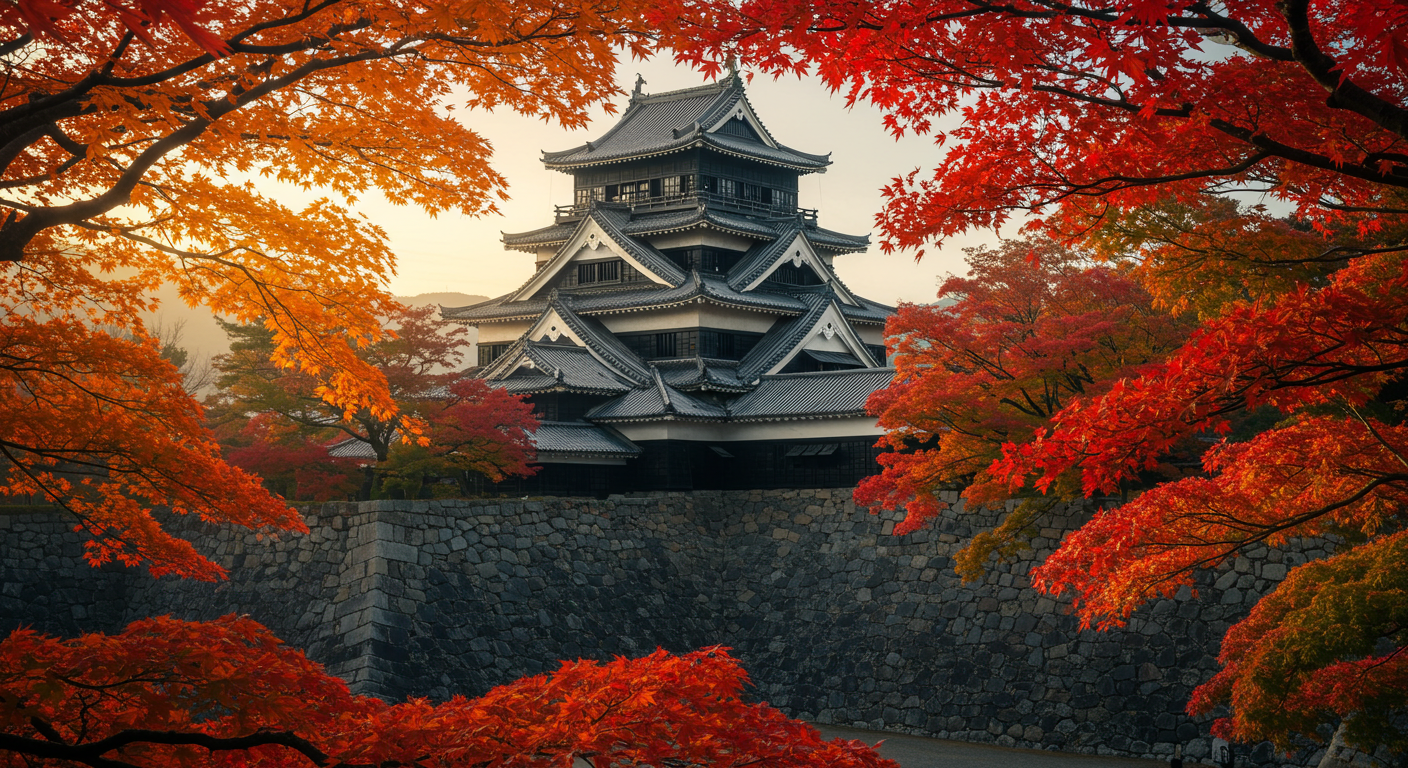
Japan was once home to thousands of castles, but today only 12 retain their original tenshu (main keep). The mass demolition of castles during the Meiji era (1868–1912) was driven by political and economic factors. This article explores why Japanese castles vanished one after another during this pivotal period.
1. The Role of Castles from the Sengoku to Edo Periods
(1) Sengoku Period Castles: Military Strongholds
During the Warring States period (1467–1603), castles evolved as military bases for regional warlords (daimyo) competing for territory. Defensive features like moats, stone walls, and towering keeps were developed, often forming the core of fortified castle towns.
(2) Edo Period Castles: Symbols of Authority
After Tokugawa Ieyasu established the Edo Shogunate in 1603, the 1615 One Castle per Domain Order restricted castle construction. Castles transitioned from military tools to symbols of a lord’s power and governance. Castle towns flourished as political and economic hubs.
2. The Meiji Era’s “Castle Abolition Order” and Demolition
(1) The 1873 Castle Abolition Law
Following the Meiji Restoration (1868), the new government issued the Abolition of Castles Ordinance in 1873, ordering the dismantling of most castles.
(2) Reasons for Demolition
- Loss of Military Value: Traditional castles were deemed obsolete as Japan adopted Western-style military infrastructure.
- Cost-Cutting: Maintaining castles was expensive. Demolition materials were sold to fund modernization.
- Erasing Feudal Symbols: Castles represented the old feudal order. Destroying them symbolized breaking with the past.
- Urban Development: Castle sites were repurposed for schools, parks, and government buildings (e.g., Nagoya City Hall replaced Nagoya Castle).
3. WWII and Postwar Destruction
(1) WWII Air Raids (1945)
Many surviving castles, like Nagoya, Osaka, and Hiroshima Castles, were destroyed by U.S. bombing.
(2) Concrete Reconstructions
Postwar reconstructions prioritized tourism and cultural heritage but often used cheaper concrete instead of traditional methods (e.g., Osaka and Nagoya Castles).
4. Surviving Castles and Cultural Preservation
(1) The 12 Original Keeps
Only 12 castles retain their original tenshu, including UNESCO World Heritage sites like Himeji and Matsumoto Castles. Others, such as Hirosaki, Inuyama, Hikone, and Matsue Castles, are national treasures.
(2) Preservation Efforts
Since the late 20th century, cultural heritage awareness has spurred restoration projects. Kumamoto Castle, damaged in the 2016 earthquakes, is currently undergoing reconstruction.



コメント
コメント一覧 (13件)
discount androxal generic from canada
cheap androxal uk suppliers
cod delivery enclomiphene
how to order enclomiphene australia purchase
discount rifaximin purchase online from canada
buy cheap rifaximin buy virginia
cheapest buy xifaxan generic compare
pharmacy canada xifaxan
cheap staxyn lowest price
buying staxyn price australia
buy cheap avodart cost new zealand
online order avodart generic available
online order dutasteride buy online australia
best dutasteride prices
purchase flexeril cyclobenzaprine cheap generic uk
how to order flexeril cyclobenzaprine cheap prices
buy cheap gabapentin uk buy cheap
pfizer brand gabapentin made in usa
where can i get fildena
how to order fildena price for prescription
purchase itraconazole generic pharmacy online
online order itraconazole buy mastercard
online předpis na kamagra
nakupte kamagra online online
acheter kamagra australie
generique kamagra envoyer buy online